Guest Post: Nyxie’s Nook
My sleeping schedule has always been non-existent, hence why tips to get to sleep are essential for me to help me fall asleep fast. While some may stick to strict bedtime rules for a good night’s sleep, I simply ‘wing it.’ I’m a natural creature of the night, more commonly known as ‘A Night Owl’. Apparently, I’m among 20% of the population who prefer the absence of the sun, as opposed to watching it rise. My kind would much rather go to bed well after midnight and awaken sometime after lunch for a better sleep.
This has been a constant throughout my life. What I thought was a teenage phase is actually just my personality. But sadly adult life requires daytime functioning, and so I’ve learned to adapt as best I can to get enough sleep. The most effective method is reducing my caffeine intake after four in the afternoon. However, due to my elevated levels of anxiety and my tendency to have nightmares, *medication has been my saving grace when in a stick and having trouble sleeping.
Here are some tips to fall asleep that I use to help me with how to fall asleep fast and get a good sleep!
*Medication isn’t always recommended or required to regulate sleep. Please try all alternative and natural methods before using over-the-counter medication. Likewise with prescription medication. Sleeping aids are easy to become reliant on and can be dangerous when used incorrectly.
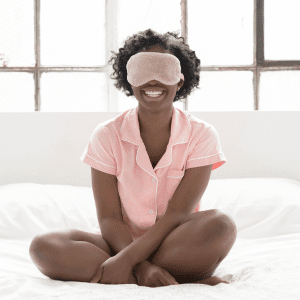
Why is sleep quality Important?
Sleep is essential for not only our physical health but also our mental health. Trouble falling asleep can be exhausting, frustrating, and downright irritating. It’s just as important as eating, drinking, breathing, etc. Sleep and poor health are strongly related. Without enough restful sleep, you can find yourself suffering from some serious side effects. With severe sleep deprivation you may even die.
While we sleep our body recovers from physical and mental strain. We go into a hyper-relaxed state where our tendons, neurons, brain cells (etc) can all repair themselves in peace.
5 Natural Ways To Get To Sleep (For night owls)!
1. Schedule.
Set yourself a time to go to bed and stick to it. It’s fine to step outside the norm of your bedtime routine every once in a while for special occasions. But for the most part, try to go to bed around the same time every night to establish a routine and regular number of hours of sleep. This will help you with falling asleep and is one of the more simple tips to get to sleep to improve sleep.
If you’re afflicted with the night owl curse, don’t let your instincts take over. Night owls are attracted to the night, and that’s fine, but you can’t be in a relationship with it. We’re diurnal mammals by nature after all.
Regular sleeping and waking times have been proven to be beneficial to our bodies and help prevent chronic sleep issues, especially in older adults. In order to keep a consistent sleep schedule determine how much sleep you need. Think about when you need to get up for work in the morning, and then work your way backward by six to eight hours. Whatever you come up with is the time you should be going to bed at. Bear in mind the time it takes to get ready for bed and the wind-down period in between.
This whole schedule also applies to your days off for a better night’s sleep. Don’t go thinking you can stay up late and then just lie in the next day. Once you get out of the routine you risk a sleepless Sunday night, and there’s nothing worse than pre-Monday insomnia and messing your sleep cycle.

2. Learn To Shut Down.
There are many ways to wind down in the evening. You could try bedtime meditation, yoga for sleep, a warm bath, nature sounds, white noise, or simply deep breathing.
It’s also suggested that you completely switch off from emails, social media, phone calls, text messages, etc a few hours before bedtime. As well, try to avoid large meals and a big meal right before bed to help improve your chances of good-quality sleep. For some folks, spicy foods can also be disruptive to sleep and cause sleep troubles. This is to reduce the levels of interference from technology, and bright light that comes from electronic devices. Blue Light before bed can have a major effect on sleep for most people and reduce relaxation. To get a deep sleep, reduce technology 1-2 hours before bed to help with reducing light exposure and not creating an additional sleep problem for bedtime.
3. Make Your Bedroom A ‘Sleep-Friendly’ Haven.
This is a personal failure on my part. I raise my hand up and say ‘Oops!‘ wholeheartedly. Apparently, if we remove electronics from the bedroom we’re more likely to get a healthy night’s sleep because we’re free from distraction, which can affect sleep. Who knew?!
You should also ensure that the bedroom is kept as dark as possible to aid in melatonin production and release (the sleep hormone). Some would go as far as to say that the room should be kept cool as it promotes healthy sleep, to help lower body temperature.
I have a different idea in regards to the light and temperature of the room, but this is just a personal preference. I don’t like the cold for my room temperature, so I always go to bed with a hot water bottle.
The lighting situation is a tough one too. I prefer a dim light in the bedroom as opposed to complete darkness. Yes, I know, grown woman scared of the dark? What!? I’m not scared, just apprehensive. Having a dim light on in the bedroom makes me feel safer mostly because sleep paralysis is a very real fear of mine. Having a dark space will help your internal clock wake when you’re rested and help curb those restless nights trying to fall asleep. You can also use a noise machine if you live in a place with more noises such as an apartment. Be sure to purchase black out curtains if you’re worried about natural light or city light interrupting your sleep. Or consider a sleep eye mask.
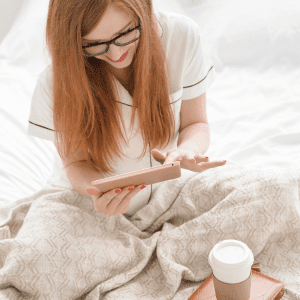
4. Keep An Eye On Your Intake Before Bed.
Limiting your caffeine well before bedtime is a good idea to improve sleep quality and help fall asleep faster. I try to cut myself off at four in the afternoon at the very latest. In fact, my mother, who also has issues with sleep, recently took the plunge and switched to decaf. She’s told me that since giving up caffeine on a daily basis her sleep has been somewhat on a regular sleep schedule for the first time in years.
You don’t have to go cold turkey on the caffeine. Switch to decaf at about three in the afternoon before going any further to help your sleep hygiene. Night time coffee consumption is most common in college student, and can make restless leg syndrome worse for some folks. Fight the early evening lull (which we all get, it’s chemistry folks) with a few stretches or get some fresh air, engage in mindfulness meditation and other relaxation techniques.
5. Keep Your Workouts As Early In The Day As Possible.
One of the last tips to get to sleep is about physical activity and a common way we think about how you make yourself tired. You would think getting in a late gym session would tucker you out but no, quite the opposite especially for your heart rate coming down. Working out provides adrenalin and stimulus to your brain neither of which sit well when trying to get over to sleep. Cue laying on your comfortable mattress with your eyes wide open in the middle of the night.
If possible keep the workouts for the morning hours or early afternoon. Don’t head to the gym at eleven-thirty if you can’t sleep. I’ve made that mistake so you don’t have to!
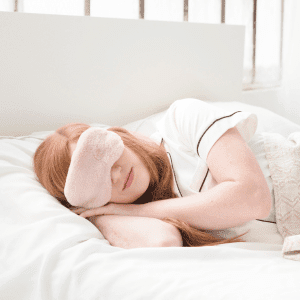
Summary
Sleep isn’t for the weak. You can’t just sleep when you’re dead or catch up on it at a later date. Sleep is important to not only our mental health but also to our physical, emotional, and social wellbeing. I hope these tips to get to sleep are helpful in helping you fall asleep fast! If you’re having problems getting over to sleep or sleep difficulties speak to your GP or health care provider, this article is not trying to provide medical advice.
You can also keep a sleep diary to better understand how to improve the quality of your sleep and learn more about your recommended amount of sleep. Together you can hopefully come up with a plan to try and combat negative patterns without the use of harsh medications. However, if medication and a sleep aid is the only option, remember to take responsibility. With a regular schedule you can begin to stop dreading that alarm clock and build a healthy daily routine for sleep.


Awesome post. It’s so nice hearing someone sleep isn’t for the weak and something you can catch up on. Sleep is vital for our well-being. These are great tips, especially sticking to a schedule.
this was such a great post as i’m quite the night owl. i’ll spend hours at night reading. i need to create a healthier routine for sure. hope these tips inspire me. 🙂
Interesting article. I probably should stop drinking coffee in the evening.
Great tips! These surely help us keep good sleep hygiene. It’s super important for our well-being. I think the one I mastered more recently is learning to shut down. Sometimes it was really hard! Thanks for sharing! Following you now on IG too.
I’m not really a night owl (anymore) and I have absolutely no trouble getting to sleep 99% of the time. But my boyfriend tends to stay up late and sometimes he just can’t get to sleep, usually when he’s stressed about work. So i’ll need to pass some of this advice along to him!
Excellent tips and advice; getting good sleep is so important for our physical, emotional and mental health. I am so relieved that mine has improved but I’m bookmarking this for extra ideas if/when it gets a bit disrupted again.
I’m so glad to hear you were able to find what works best for your Charlie! Routines and Schedules can honestly be such a help when having a tough time with sleep. 🙂
Right – Chloe is so real and honest it’s so refreshing in this post! I’m glad you enjoyed her guest post 🙂
Thanks, B, it is quite easy to get sucked into a good book and lose track of time, especially in the evening! I hope you’re able to find a routine that works and helps you get to sleep 🙂
Thanks, Jamie, Chloe did a fab job! I’d recommend looking at different natural energy beverages that have less of a caffeine spike and crash for the evening, or switching to decaf if possible 🙂
Amazing to hear you’ve mastered such a great skill of shutting down to help you get to sleep at night, that’s so impressive and I’m jealous! I’m glad you enjoyed this post 🙂
Great to hear Jenny that this post can be helpful for your boyfriend and possibly help him with getting to sleep! It’s great to hear you’re able to get to sleep so fast and have found what works well for you and your body! 🙂
Thanks, Molly – you’re right it’s so important for every aspect of our health! I’m glad to hear you’re feeling good with your current routines and you’re going to keep this in case needed in the future! Thanks for taking the time to comment.
Yes, these are all such good ideas and tricks to try to get some routine sleep if you are a night owl! Thanks so much for sharing!
As a night owl myself, I find these all useful. Having music or background noise playing helps me relax for bedtime. Thanks for sharing!
TheQuietGirl | http://www.quietgirlblog.com
I’m so glad to hear this post was able to give some good ideas! Thanks, Charity.
I’m so glad to hear you enjoyed Chloe’s tips for night owls and I hope they help you get a good night’s sleep!